
Popularism – the providing of wild promises attractive to the economically and socially marginalised – is on the rise globally and in South Africa. The fuel that drives popularism is not hard to identity. Globally, inequality is on the rise and in South Africa after 30 years of democracy we remain one of the most unequal societies on earth. Popularism offers, like quack doctors, quick solution to complex problems, but never ends well, either for those attracted by, or fearful of, the promises made.
There is an urgent need to re-think and re-orientate the transformational path that South Africa commenced in 1994. This was, in short, one of state driven socio-economic rights, that the courts would shepherd, balancing the constitutional rights of the privileged and disadvantaged. We now know that this hoped for transformation has not happened: increasingly the rule of law is undermined and its institutions stumbling.
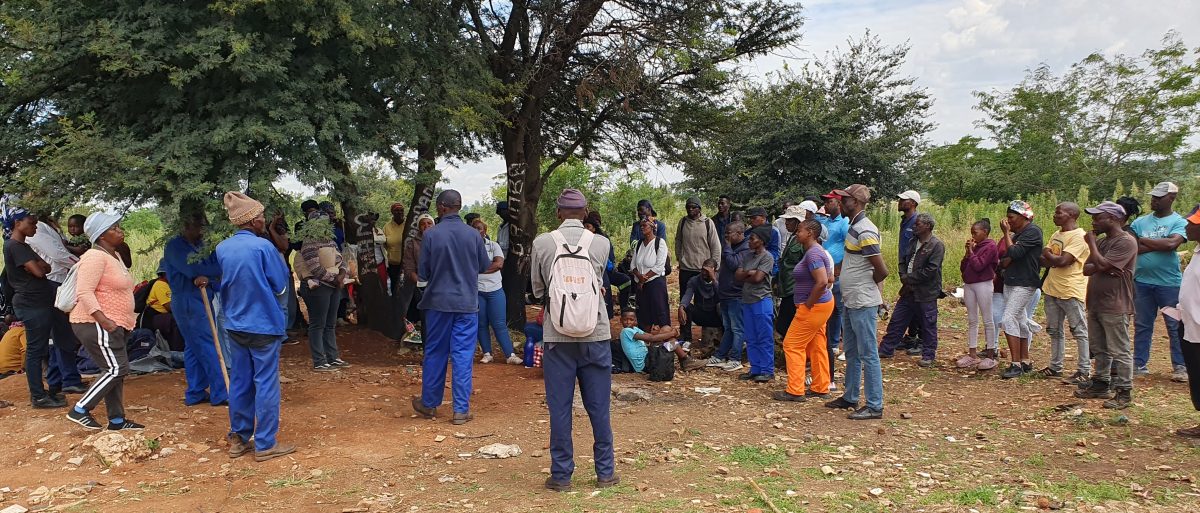
Our point of departure is that even success at a judicial level is meaningless unless communities are mobilised to press home progressive social change. Those working on the ground know just how difficult it is for a community to act in a united fashion, even when facing external and existential threats. The root of this difficulty is the very problem that needs to be overcome: our vast inequalities and the temptation to follow individual routes to success at the expense of social solidarity and inclusive development. Community mobilisation, if it is to bring about change must not only tackle powerful forces in society but must also find ways in which to maintain unity.
This is not impossible. The Treatment Action Campaign (TAC) offers an example of how social mobilisation, and the courts, can bring about progressive change. TAC sought to enforce access to HIV/AIDS treatment through a combination of protest, mobilization, and legal action. The TAC provides a valuable model because it not only demanded from the state but also built a powerful grassroots movement within poor communities founded on understanding the science HIV/AIDS and the power of the pharmaceutical industry. TAC achieved a turnaround in government policy, that was eminently sensible. As Mark Heywood a key figure in the campaign put it, ‘a net gain for poor people.’
To carry this example forward, across a range of challenges, at scale, and in an increasingly difficult environment is the task that must now be shouldered. The wider South African justice system, including public interest law organisations such as Lawyers for Human Rights as well as state institutions, such as Legal Aid South Africa and the Chapter 9 institutions, and the courts are facing the limitations of the post-1994 model in which legal assistance would bring about social justice. We must also recognise that however functional the state it cannot do everything for everyone. We need a strong, self-regulating, civil society, by which we mean communities not only rich but also poor, organised at local level. These communities must apply political pressure, use the law, and drive progressive self-help initiatives.
We need to recognise the limits of transformation from above and, rather, build transformation from below. Access to justice organisations can play a catalytic role in this regard by exploring, evaluating, and then implementing community mobilisation. This is hard slog activity that is often lauded but all too often submerged by the demands of prosecuting legal action on behalf of clients as well as being deflected the glamour of mounting ‘strategic litigation’ in the highest courts of the land.
The coalition government now in place is not a panacea for the increasingly chaotic trajectory of our society. Rather, we should see it as an opportunity to work with communities, build alliances across divisions, and create grassroots power to pursue development with all democratic tools available.
Lest we, part of the privileged sectors of South African society, find this unsettling and would find it easier to speak on behalf of the poor, rather than assist them to speak and act for themselves, we should look at what lies ahead should popularism win the day. When governments fail it is the poor that suffers most, but when popularists seize the reins of power everybody suffers.
It is still to be seen whether the coalition government will bring improvements in the state’s efficiency, but the state we are in requires more than greater efficiency. Our communities have diminishing hope in the promise of 1994 for orderly progress, something illustrated by ever lower voter registration and voter turnout. We must find new ways that can be mobilised to empower communities to empower themselves. If we cannot to that then others will make promises that will bring only misery for all.
Written with Wayne Ncube, published in the Mail&Guardian 7th October 2024
