
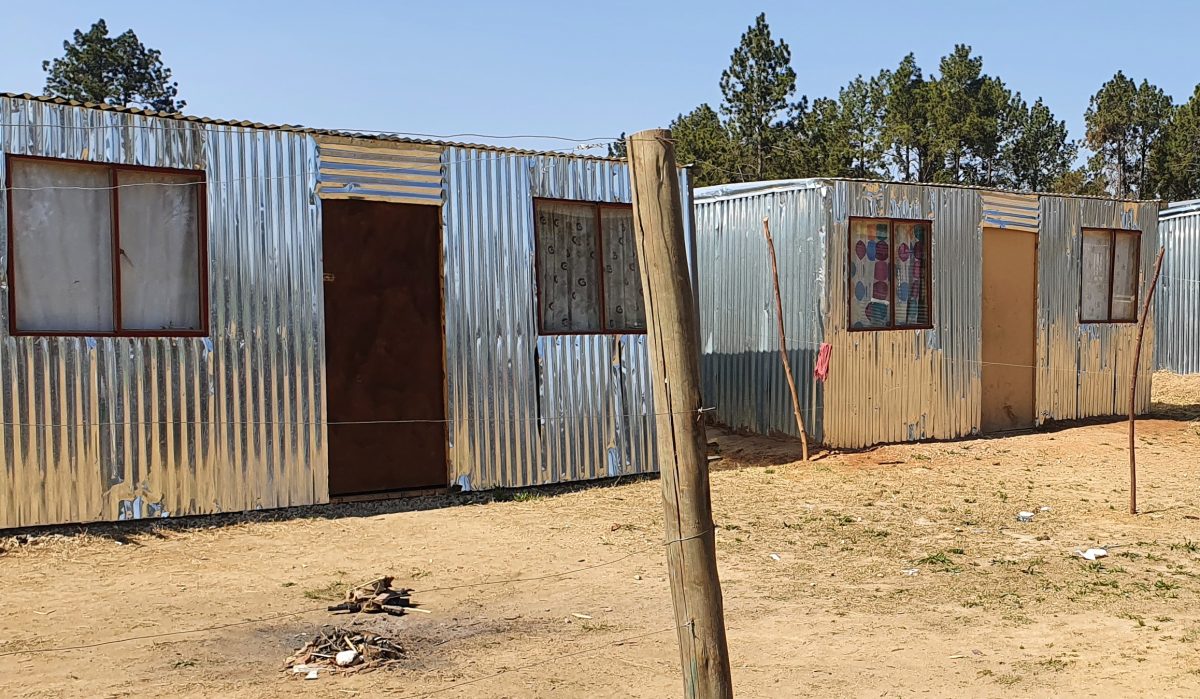
Land in South Africa remains contested. A key flashpoint is land invasion in urban areas as people living in township backyards seek a place of their own. Section 26(1) of the Constitution states that, ‘Everyone has the right to have access to adequate housing.’ Yet, twenty-six years after the Constitution was adopted, the attempt to orderly manage South Africa’s human settlement has failed. Informal settlements now all but ring the cities and abut every town, mine or other center of economic activity.
Informal settlements are mostly established on land this is unused or otherwise marginal. What protects land from occupation is not a title deed but is what is happening on it – land that is being actively utilized is very rarely occupied. However, despite leaving land unused, land owners, often municipalities or other government entities, seek to enforce ownership against occupiers rather than cede their property. Eviction proceedings follow.
The laws regulating evictions, PIE and ESTA (in the case of farm workers), were drafted to enable Section 26(3) of the Constitution which states that: ‘No one may be evicted from their home…without an order of court…’ One aspect courts must consider before granting an eviction is the availability of ‘suitable alternative accommodation or land’ for those evicted. This is an important consideration in a country as unequal as South Africa. A home is a fundamental requirement for family life, and for social stability.
The provision of alternative accommodation generally falls to municipalities. These are increasingly collapsing under the burden of inadequate central government funding, mismanagement and corruption. With the country’s housing program falling ever further behind, municipalities increasingly rely on offers to provide ‘temporary emergency accommodation’ when joined to eviction proceedings (not infrequently their own). This offer is sugar coated with promises, without timelines, of permanent settlement in future housing projects for South African citizens entitled to the government’s housing subsidy.
With the completion of low cost housing projects ever receding into the distance, this emergency accommodation becomes all but permanent. The typical conditions are beyond basic. A 24 square meter shelter of corrugated iron on a stand of 120 square meters, each zozo just three meters apart, water from JoJo tanks which often run dry, and chemical toilets. Dust blows in winter, shacks leak in summer thunderstorms.
If these were truly temporary arrangements they could be condoned. But as months turn to years, and years into decades, we are creating dystopian warrens of poverty, addiction, child malnutrition, dysfunctional families, and the tinder of social conflagration.
And here’s the kicker: such ‘emergency’ alternative accommodation typically provides less space, dignity and economic opportunity than the squatted stands, on which occupiers had built their homes. The tiny stands and crowded rows offer almost no opportunity for families to supplement income with informal economic activity, whether vegetable gardens, chicken coops, or recycling. If we wanted a policy that would keep those at the very margins of our society in perpetual poverty, the establishment of these ‘permanent-temporary slum settlements’ would be hard to beat. Indeed, the outcome is little different to the forced removals of apartheid.
There is no easy answers to the land question, but a start would be to acknowledge that we cannot build houses for all. The chimera that ‘emergency temporary accommodation’ is an adequate response must be abandoned. Unless there are good reasons why land invaders cannot remain (and bare ownership is not enough when balanced against human dignity and social stability) then they should be allowed to remain where they are until permanent sites are, in fact, available.
Further, since we cannot build houses of bricks and mortar for all who need them, we need for a dramatic shift in housing policy. Unused land in urban areas should be releasing for occupation as stands with title deeds for a nominal charge. Importantly, these stands should be large enough to allow their owners to supplement income and build livelihoods that the formal economy cannot. Services can follow. Given the security of ownership, people will do the rest themselves.
David Dickinson and Louise du Plessis. David Dickinson is professor of sociology at Wits University, Louise du Plessis is Manager of Lawyers for Human Rights’ Land and Housing Program.
Published in the Daily Maverick 15 January 2023.
